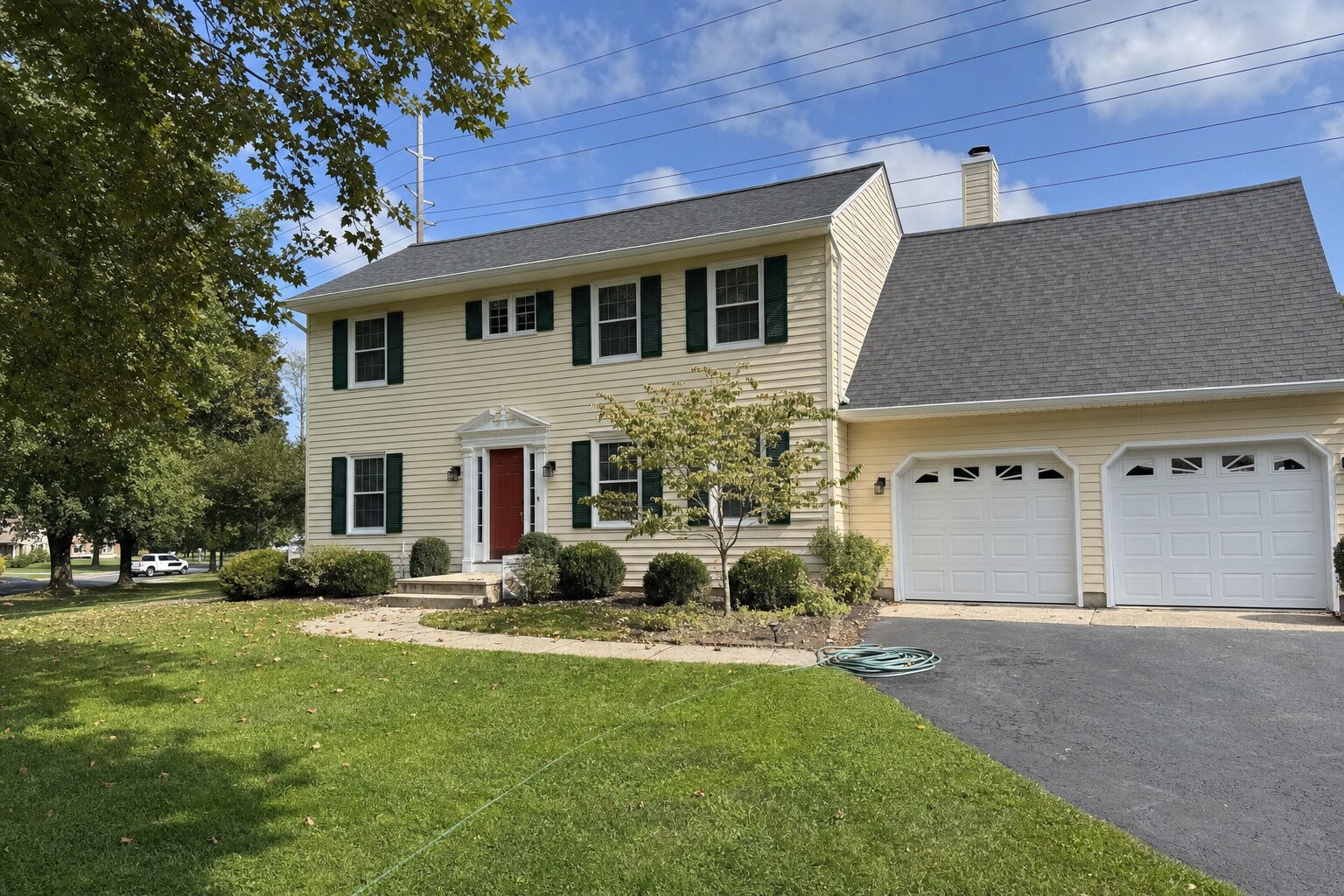
"Pressure washing" has become the catch-all name for cleaning the outside of a house, but the industry actually uses two very different methods — and using the wrong one on the wrong surface is how siding gets cracked, shingles get stripped, and window seals get blown out. Here is the difference in plain English, and which method belongs on each part of your home.
The Difference in One Paragraph
Pressure washing uses water at high pressure — typically 1,500 to 4,000 PSI — to physically blast contamination off hard surfaces. Soft washing flips the formula: pressure comparable to a garden hose, paired with a biodegradable cleaning solution that does the actual work by killing algae, mold, and mildew on contact. Pressure washing removes grime mechanically; soft washing removes it chemically and rinses it away gently.
The practical consequence: pressure washing is for hard mineral surfaces that can take the force. Soft washing is for everything else — which, on most homes, is most of the house.
Where Pressure Washing Is the Right Tool
- Concrete driveways, sidewalks, and garage floors. Concrete is porous and tough; high pressure with a surface cleaner is the only way to pull ground-in grime, tire marks, and oil residue out of it. This is the heart of our concrete cleaning service.
- Paver patios and walkways — with adjusted pressure and technique so joint sand is not blown out.
- Stone and brick hardscapes in sound condition (not crumbling mortar).
Where Soft Washing Is the Only Safe Choice
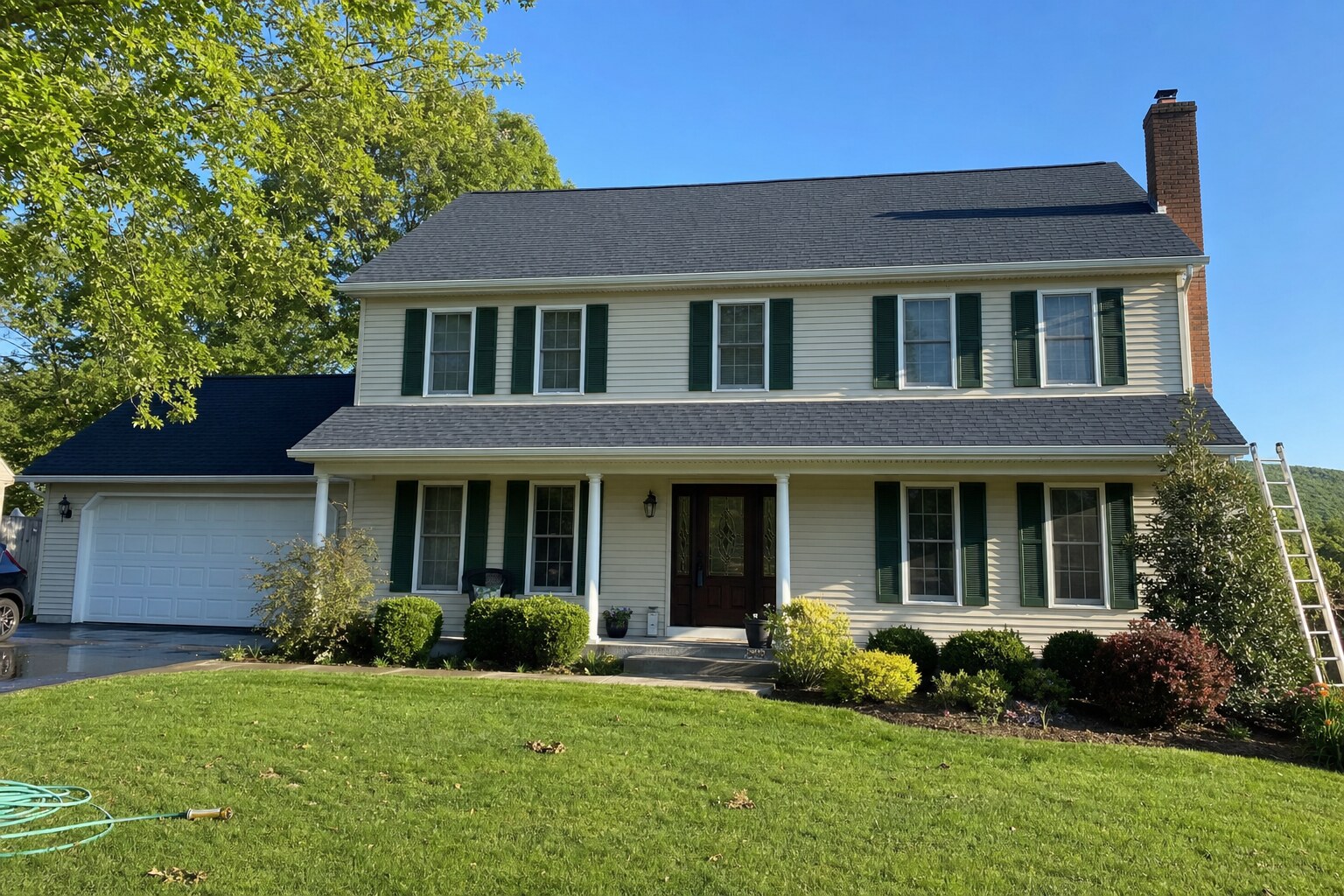
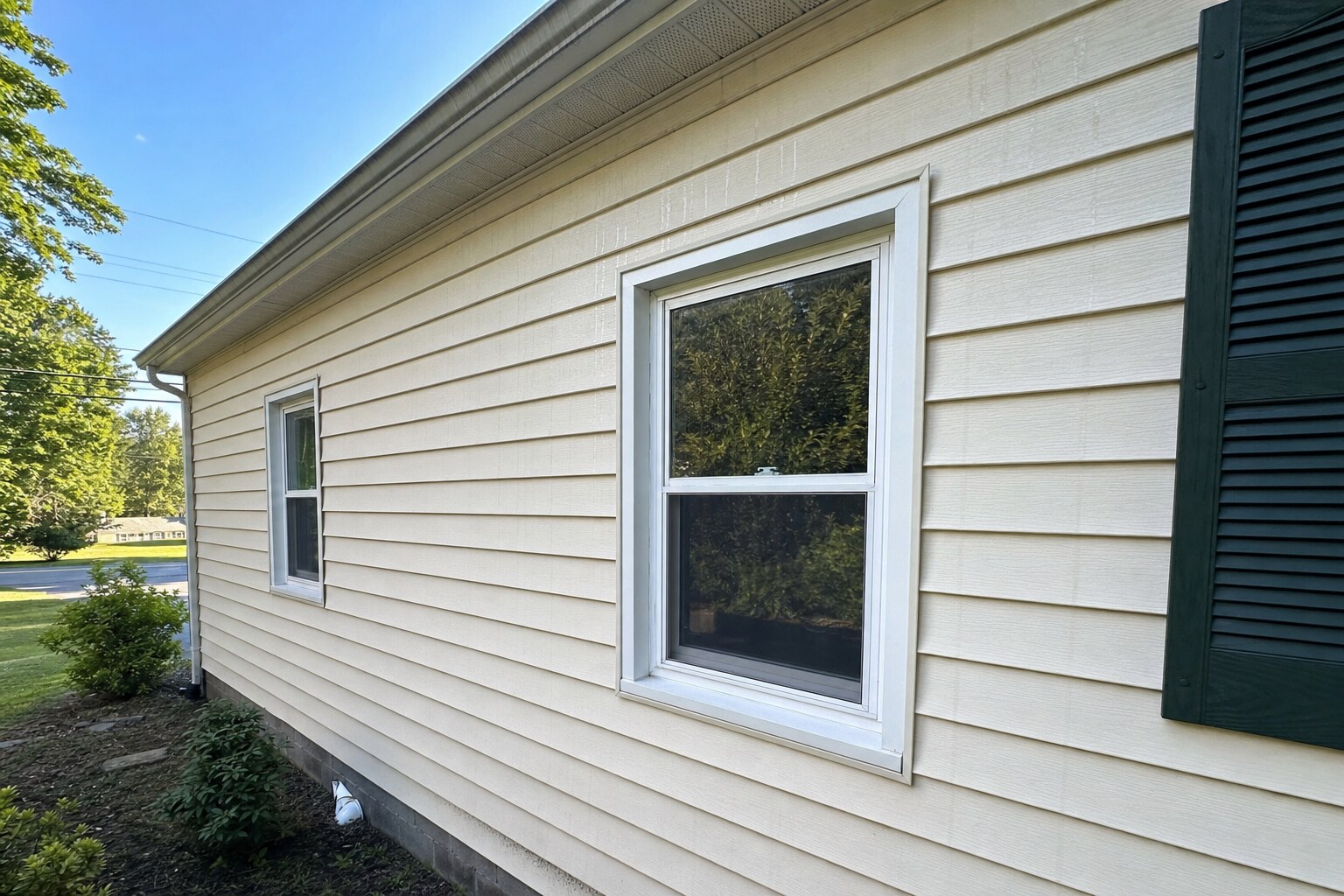
- Vinyl siding. High pressure cracks panels, forces water behind the siding where it feeds hidden mold, and leaves permanent "wand stripes" of etched lines. Soft washing is the standard for house washing — it kills the growth and the siding is never stressed.
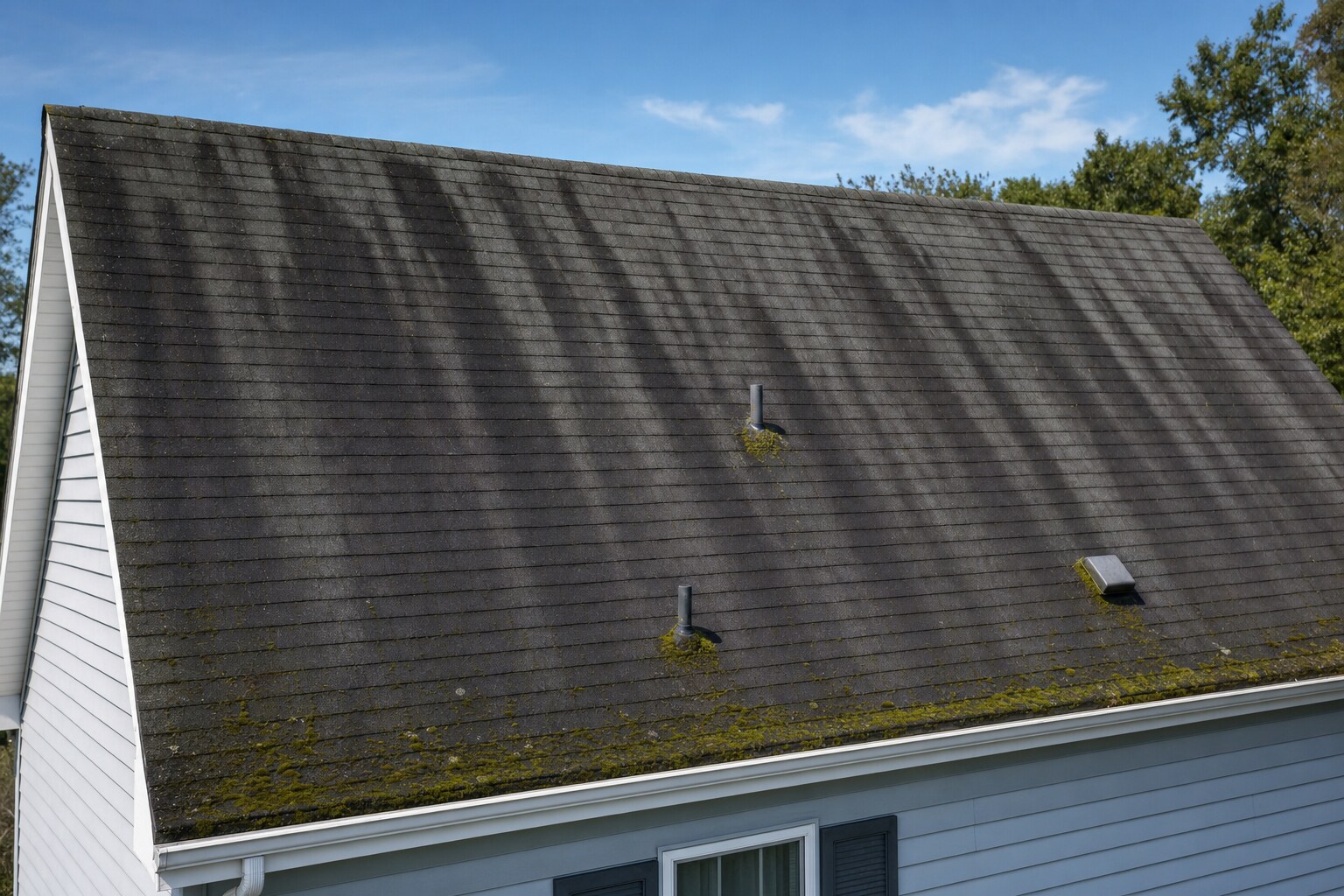
- Asphalt shingle roofs. Never pressure wash a shingle roof — it strips the protective granules and voids warranties. Shingle manufacturers endorse low-pressure chemical cleaning only. (More on this in our guide to roof algae streaks.)
- Wood and composite decks. High pressure furs and splinters wood grain and etches composite boards. Our deck and patio cleaning uses low pressure and the right solution for the material.
- Stucco, EIFS ("synthetic stucco"), and painted surfaces. Pressure gouges stucco and peels paint. Soft wash only.
- Cedar shake, board-and-batten, and older brick. Soft materials and aging mortar cannot take direct high pressure.
Why Soft Washing Lasts Longer
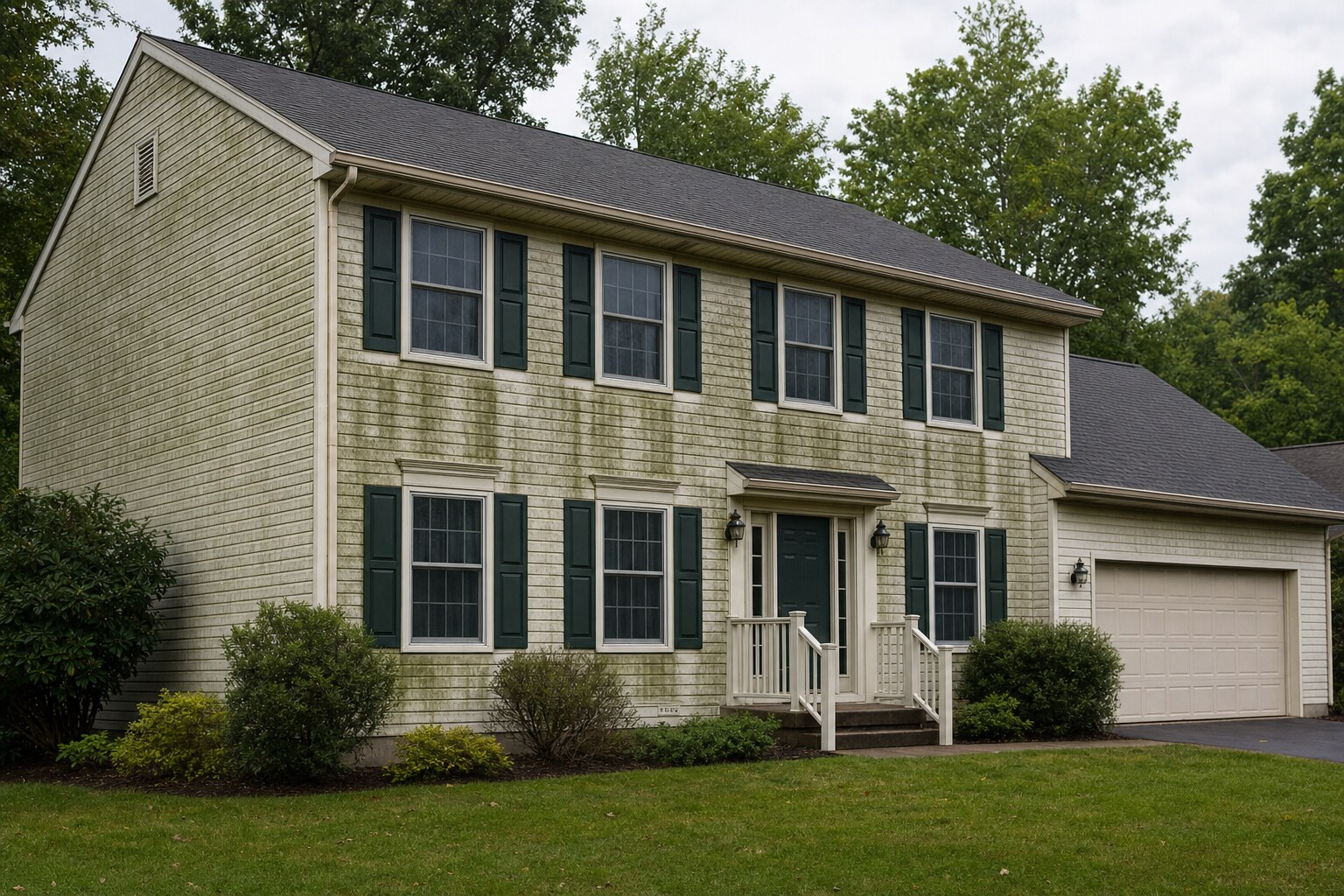
Here is the detail that matters most for NEPA homes surrounded by trees and humidity: the green and black growth on siding and roofs is alive. Blasting it with plain water removes the visible layer but leaves the organism rooted in the surface — which is why a hose-and-brush cleaning looks good for a couple of months and then the green haze creeps back.
Soft washing kills the algae, mold, and mildew at the root. In our experience across Luzerne County, a properly soft-washed house stays clean two to three times longer than one that was simply pressure-rinsed. We cover the algae-on-siding problem specifically in Why Green Algae Grows on Vinyl Siding.
The Damage We See From DIY Pressure Washing
Rental-store pressure washers put 2,000+ PSI in the hands of anyone with a weekend, and the results keep our phone ringing. The most common damage we are called to look at after a DIY wash:
- Etched zebra striping on vinyl and wood that only replacement or refinishing will fix
- Water forced behind siding and into soffits — invisible until the stain appears on an interior ceiling
- Blown window and door seals (fogged double-pane glass)
- Shingle granules filling the gutters after someone "cleaned" a roof
- Chewed-up deck boards with raised, splintered grain
None of this is an argument that homeowners are careless — it is an argument that the machine is the wrong tool for those surfaces at any skill level.
Not sure which method your project needs? Tell us what you are cleaning through our free estimate form and we will spec the right method for each surface — house, roof, concrete, and deck each get their own approach, all covered by our No Damage Promise.
The Bottom Line
The question is never "soft washing or pressure washing" for your whole property — a typical home in Mountain Top, Kingston, or Hazleton needs both, applied to the right surfaces: soft wash for the siding and roof, controlled high pressure for the driveway and walkways. Any contractor who quotes one method for everything, or who cannot explain their PSI and cleaning solution choices surface by surface, is a contractor to keep interviewing.