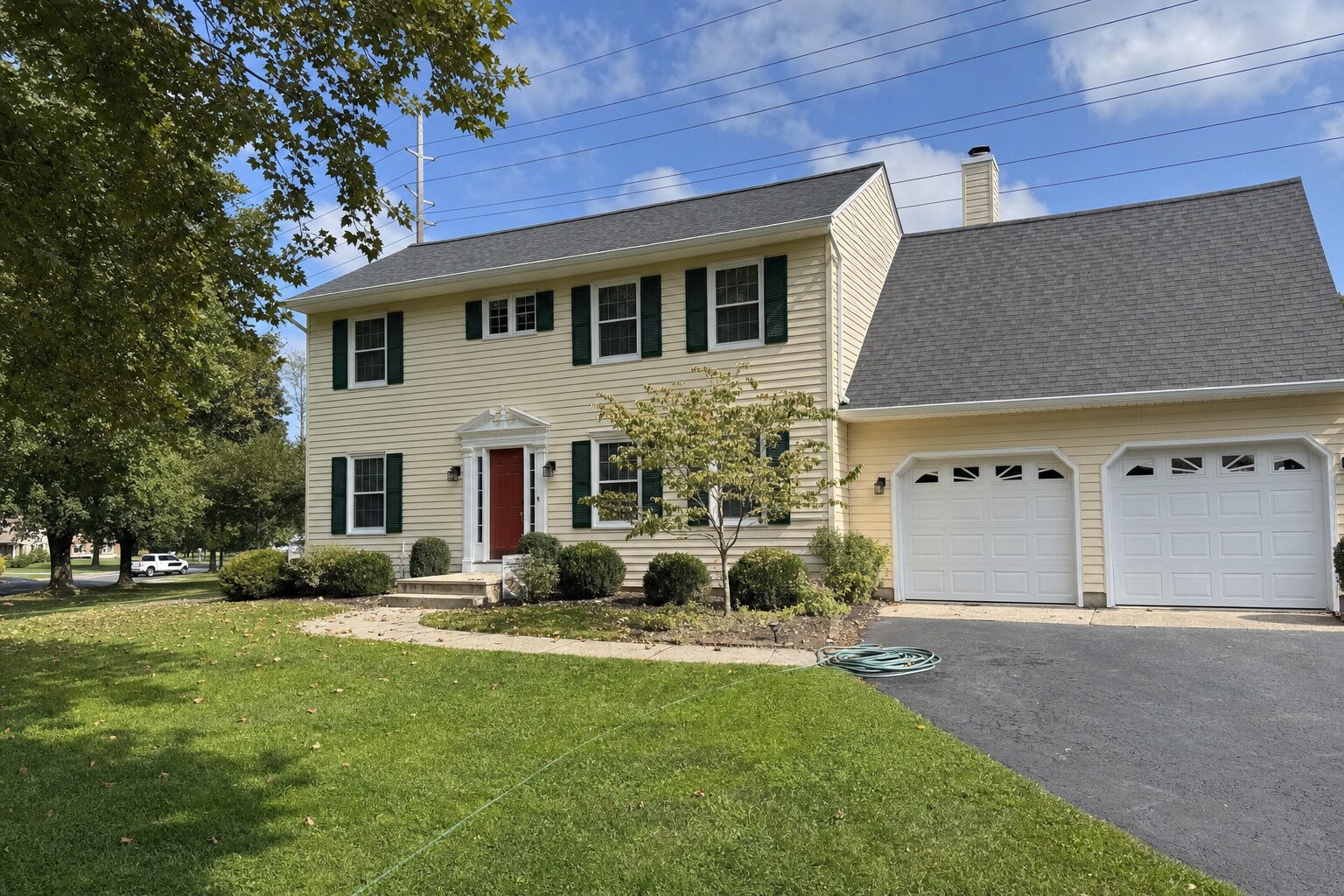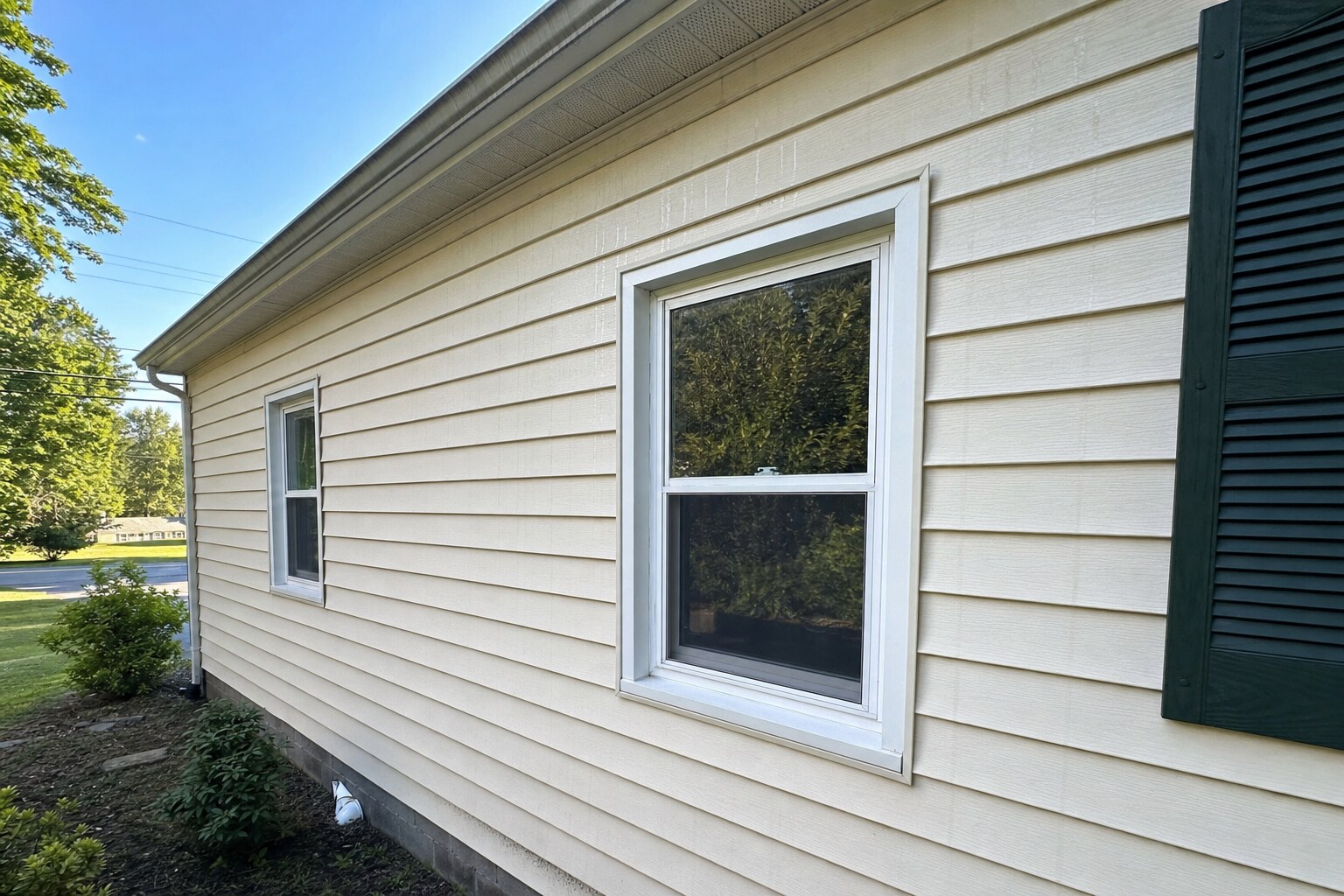
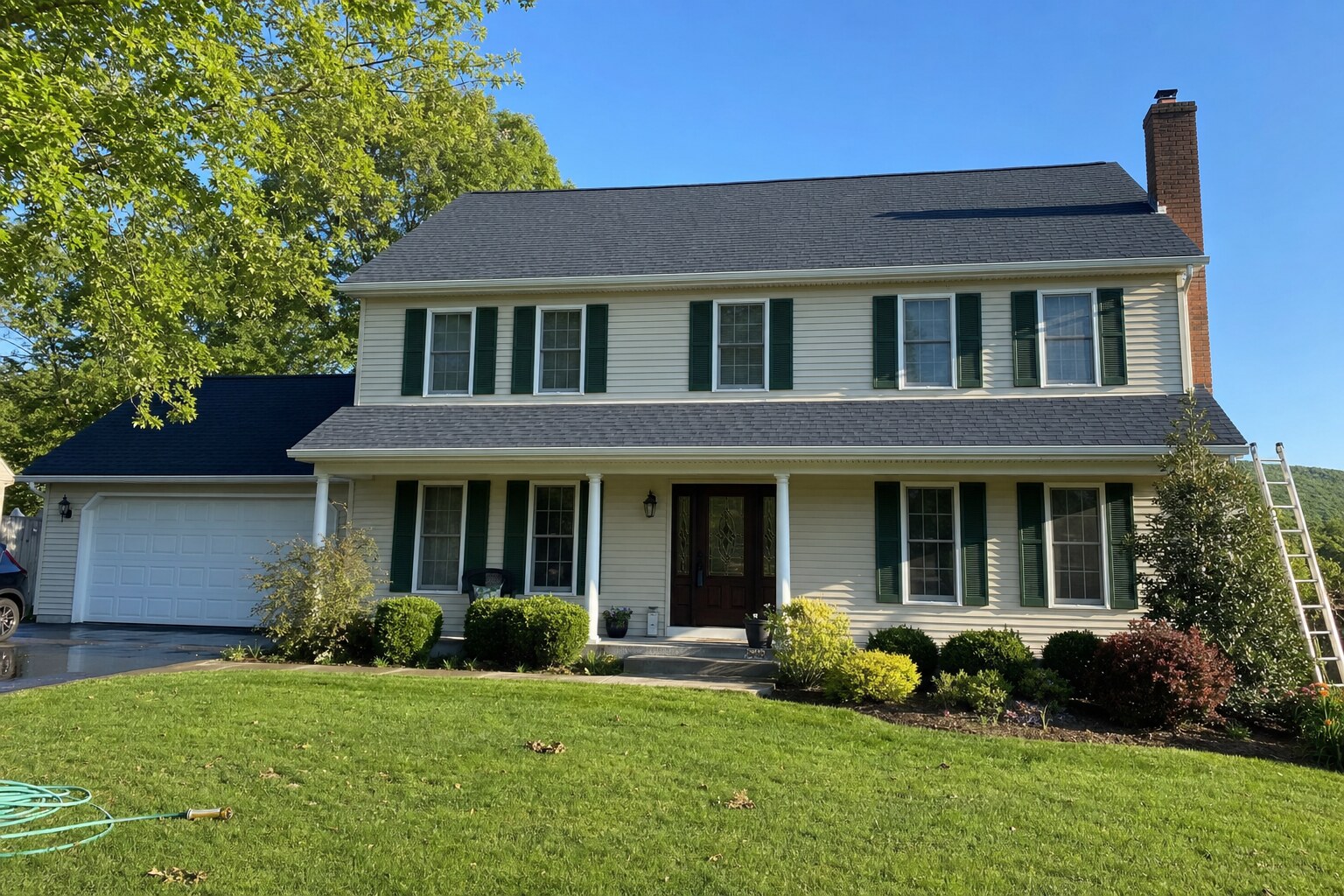
The national rule of thumb says asphalt shingle roofs should be cleaned every two to three years. Northeast Pennsylvania is not the national average. Between the humidity that hangs in the Wyoming Valley, the tree cover on lots from Mountain Top to the Back Mountain, and five months of the year where the roof barely dries out, roofs here streak faster than that guideline assumes.
Here is a realistic schedule, based on what we see on roofs across Luzerne County — and how to read what your own roof is telling you.
The Short Answer
- Open, sunny lot with little tree cover: every 3 years is usually enough.
- Typical NEPA lot — some shade, trees within 30 feet: every 2 to 3 years.
- Wooded lot, heavy shade, or a north-facing slope that stays damp: every 1 to 2 years, and inspect annually for moss.
- Any roof already showing moss or lichen: clean now, then reassess — established growth accelerates.
Why Local Conditions Move the Schedule
Three things determine how fast a roof re-contaminates after cleaning, and all three run against us here:
Moisture time. Algae grows whenever the shingle surface is wet. Valley fog, summer humidity, slow spring melts, and dew that a shaded roof holds until noon all add hours of growing time per day that a roof in a drier region never sees.
Shade. Sun is a natural algaecide — UV exposure suppresses growth. The mature oaks and maples that make lots in Dallas, Shavertown, and Sugarloaf so attractive also cast the shade that lets Gloeocapsa magma establish. If you can see moss on nearby tree trunks or fences, your roof is in the risk zone.
Spore pressure. Algae spreads by airborne spores. In dense neighborhoods where several roofs are already streaked, a freshly cleaned roof gets reseeded faster than one on an isolated lot.
Read Your Roof: The Progression to Watch
Rather than cleaning by the calendar alone, learn the three stages of roof growth:
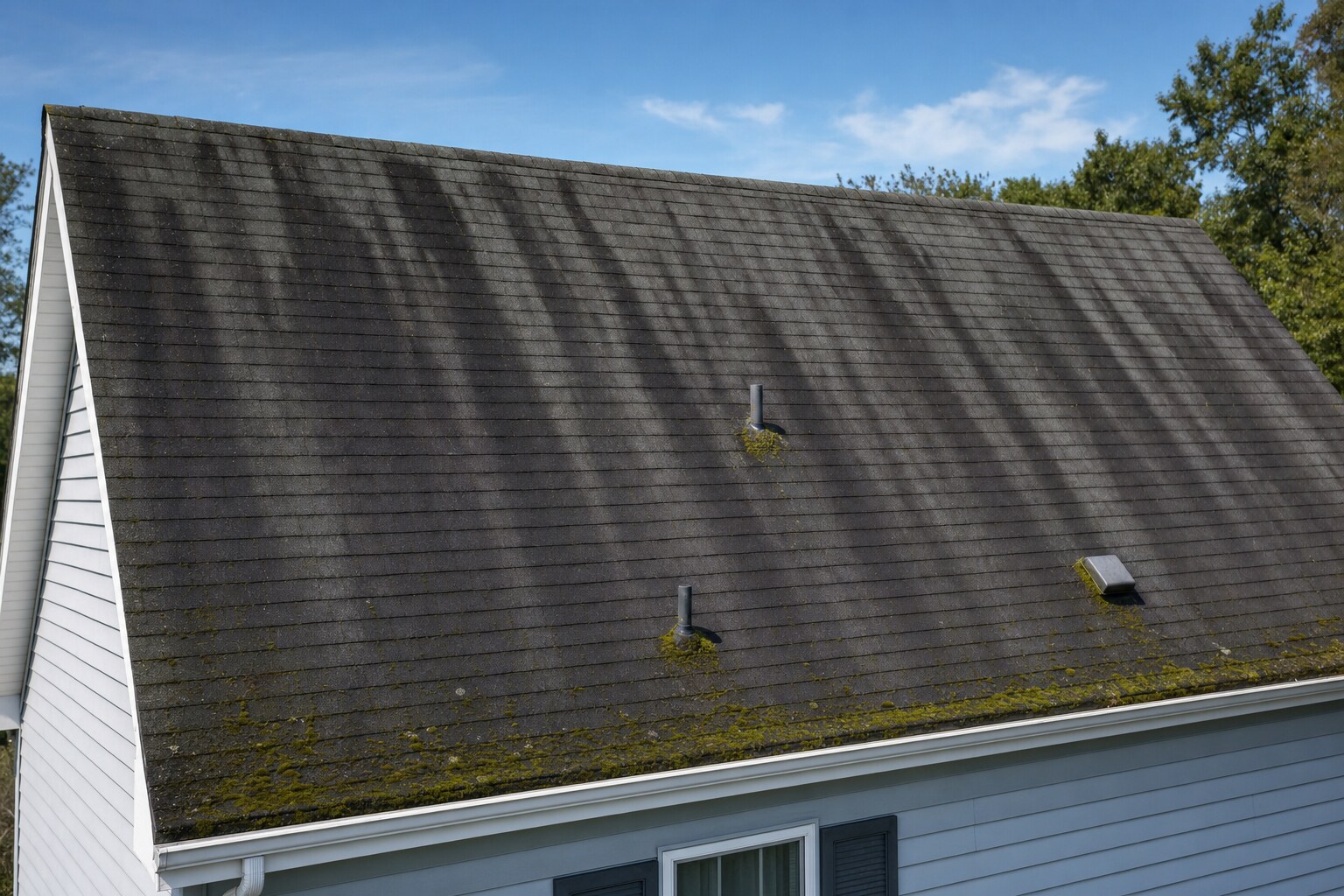
- Stage 1 — black streaks. Algae colonies, usually starting on the north slope. Cosmetic damage now, granule damage over years. A routine soft wash fixes this completely. (Full explanation: What Are the Black Streaks on Your Roof?)
- Stage 2 — moss. Green cushions along shingle edges and in shaded valleys. Moss holds water against the roof like a sponge and lifts shingle edges as it thickens — a freeze-thaw problem waiting for a NEPA winter.
- Stage 3 — lichen. Crusty gray-green discs that root into the shingle surface. Lichen must be killed and released gradually; tearing it off takes granules with it. The longer it grows, the more of the shingle it claims.
The economics are simple: a Stage 1 cleaning is quick and gentle. Stage 3 remediation takes multiple treatments, and some of the damage is already permanent. Catching the first streaks early is what keeps roof cleaning a minor maintenance item instead of a restoration project.
The Best Time of Year to Clean a Roof Here
We soft wash roofs whenever temperatures are reliably above freezing — in practice, April through early November in Luzerne County. Two windows work especially well:
Late spring clears the winter's accumulation and lets the roof enter the humid season with no established colonies. Early fall kills the summer's growth before leaves come down and snow locks the roof away until March. If moss is present, fall cleaning matters more — you do not want moss holding water on the roof through freeze-thaw season.
Not sure which stage your roof is at? Send a photo — even one taken from the driveway — through our contact form. We will tell you whether it needs cleaning this season or can safely wait, for free. No ladder required on your end.
One Rule That Never Changes
However often your roof needs cleaning, the method matters more than the schedule: asphalt shingles should only ever be cleaned with a low-pressure soft wash — never a pressure washer. Our roof cleaning page walks through the manufacturer-endorsed process we use, and this guide explains why the distinction protects your warranty and your shingles.
A clean roof is not just curb appeal. It is cheaper cooling in July, shingles that reach their rated lifespan, and one less line item on the inspection report when you sell.