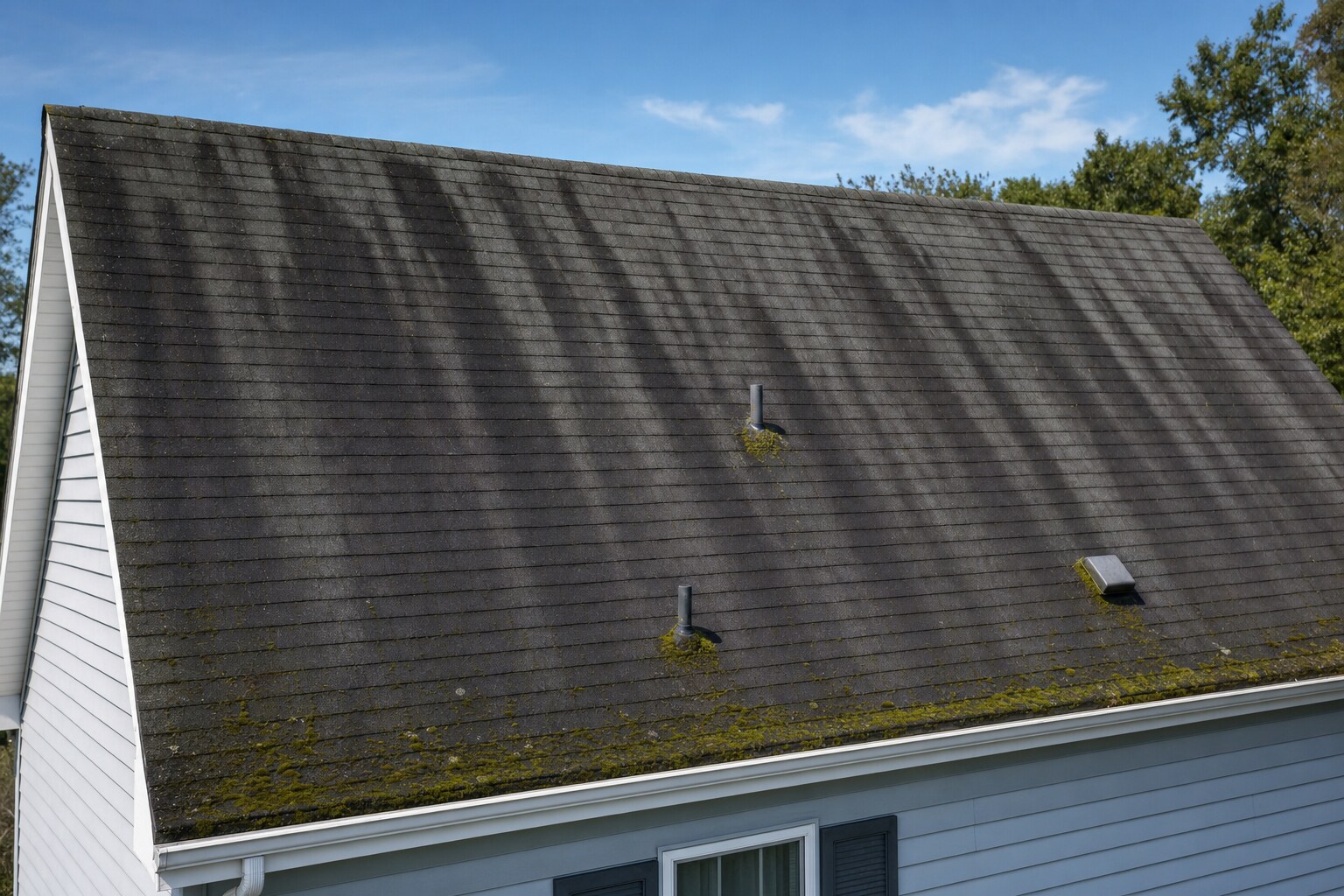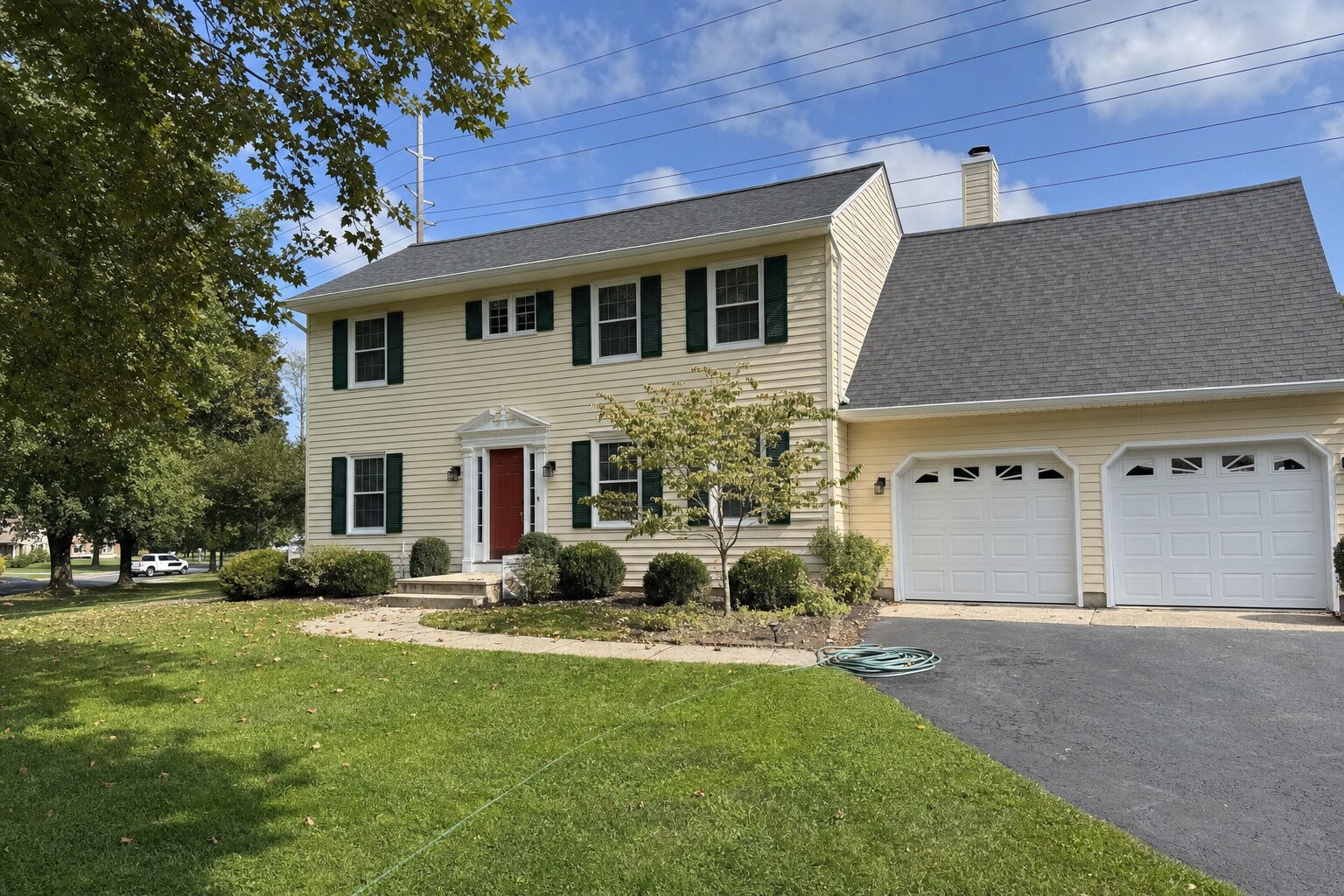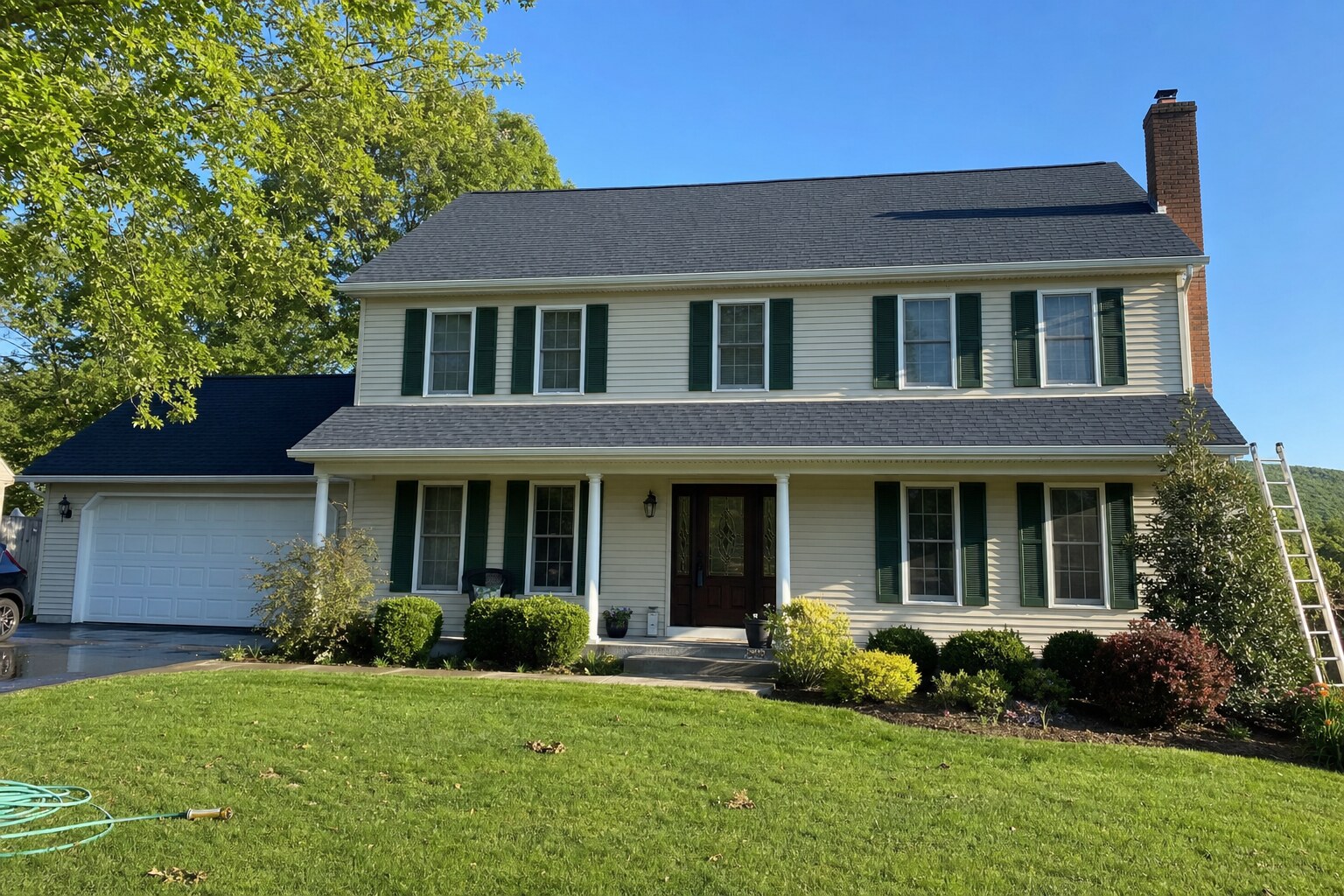
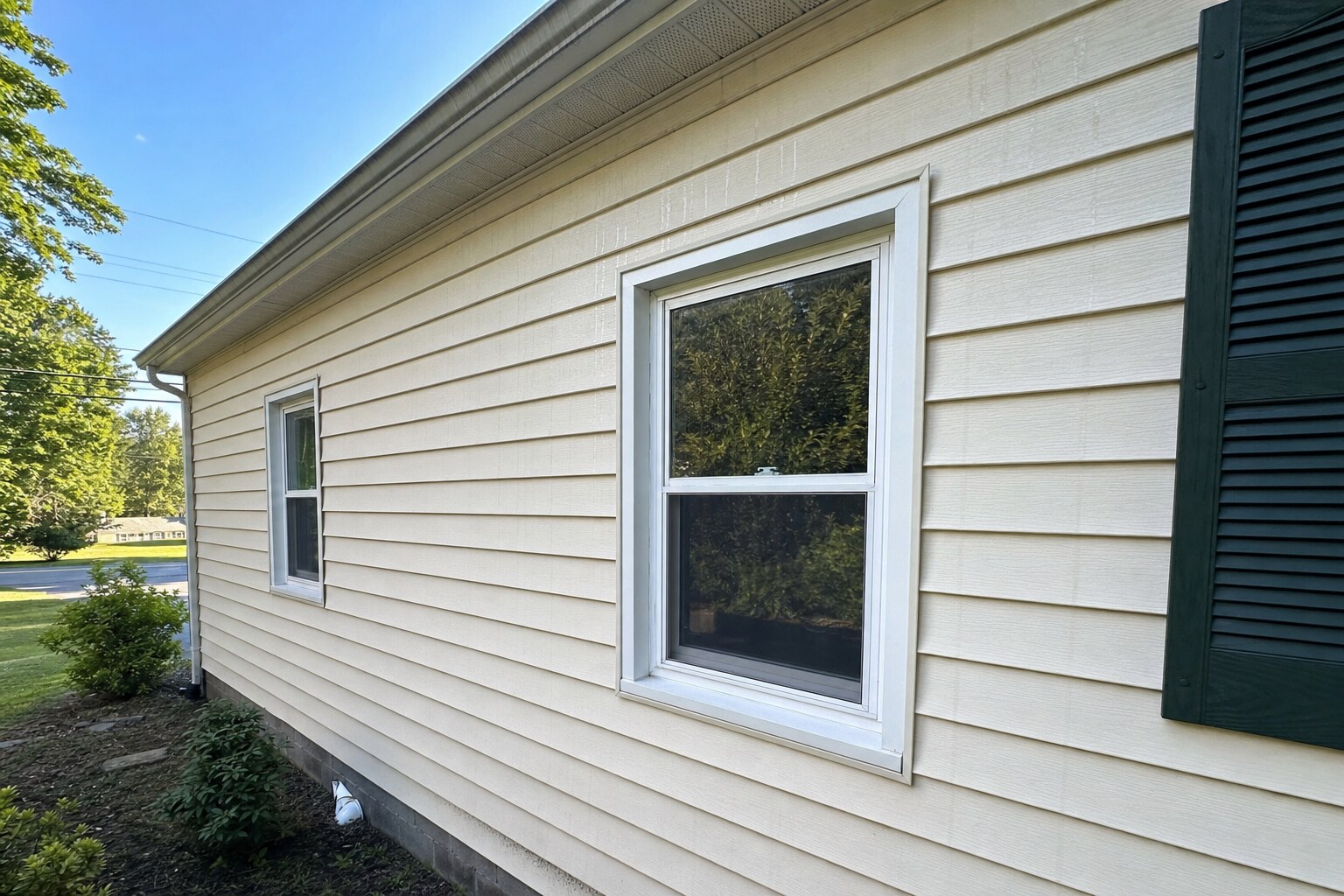
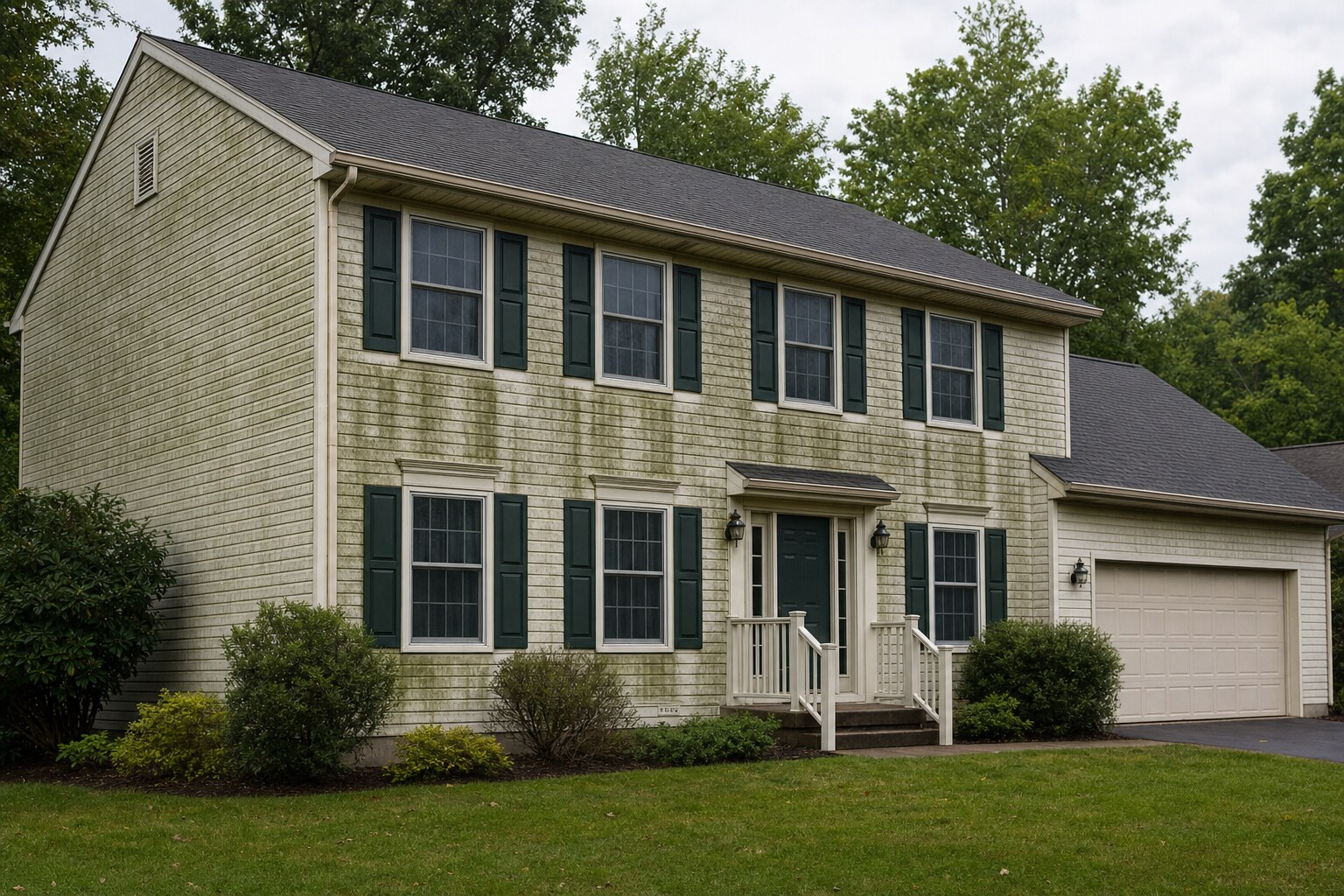
It starts as a faint green tint low on the shady side of the house — easy to ignore. A season or two later it is a visible film climbing the siding, collecting in the lap joints, and turning the north wall of the house green from foundation to eaves. If you have vinyl siding anywhere in Northeast Pennsylvania, you have either dealt with this or you will.
Here is what that green film actually is, why it keeps winning against your garden hose, and how to remove it without damaging the siding.
What the Green Film Is
The green haze on vinyl siding is algae — the same family of airborne organisms that puts black streaks on roofs, wearing green instead of black. Spores land on the siding constantly; they only take hold where three conditions line up: moisture, shade, and a food supply of dust, pollen, and organic residue on the surface.
That is why algae almost always starts on the north side of the house, under tree cover, behind shrubs planted close to the wall, and near downspouts and sprinkler spray — the places where siding stays damp longest after rain or dew.
Vinyl makes it worse in one specific way: the texture pressed into the panels to imitate wood grain gives spores thousands of microscopic grooves to root in, and the lap joints between panels channel and hold water. Mildew (gray-black spotting) often joins the algae in these same zones.
Why It Comes Back After You Hose It Off
Most homeowners fight algae the same way: a hose, a brush, maybe a big-box "house wash" bottle that attaches to the hose end. The wall looks better for a few weeks — and by the next season the green is back, usually thicker.
The reason is that scrubbing and rinsing remove the visible surface layer while leaving the organism alive in the texture grooves. Algae regrows from what remains, the way a mowed weed regrows from its root. Worse, dragging a brush across the colonies spreads viable spores across the wall.
Killing the colony — not just wiping its face off — is the entire difference between a cleaning that lasts a season and one that lasts years.
The Safe Way to Remove It
The professional method is soft washing: a biodegradable, detergent-and-sodium-hypochlorite solution applied at low pressure, allowed to dwell on the siding while it kills algae and mildew at the root, then rinsed with water pressure no stronger than heavy rain. This is exactly the process on our house washing page, and the full soft-wash-versus-pressure-wash breakdown is in this guide.
What you should not do to vinyl siding:
- Pressure wash it. High pressure cracks panels, etches permanent lines into the finish, and drives water behind the siding — where it soaks sheathing and insulation and feeds mold you cannot see.
- Scrub it with stiff brushes. This scratches the finish and spreads spores.
- Spray straight bleach from a garden sprayer. Uncontrolled concentrations kill landscaping, streak the finish, and corrode fasteners. Professional solutions are mixed for the surface and the level of growth, and plants are pre-wetted and rinsed as part of the job.
Keeping It From Coming Back
Nothing makes siding permanently algae-proof in a climate like ours, but you can stretch the time between cleanings considerably:
- Trim back trees and shrubs so the wall gets airflow and some direct sun. Even two feet of clearance behind foundation plantings makes a measurable difference.
- Fix water paths: redirect sprinklers off the siding, extend downspouts, and repair gutters that overflow down the wall. (Overflowing gutters also leave their own dark "tiger stripes" — our gutter cleaning service handles both problems.)
- Clean on a cycle instead of on a crisis. A house washed every 1 to 2 years never develops the heavy colonies that stain and shorten the life of the finish. Homes on wooded lots in Drums, White Haven, and Mountain Top sit at the short end of that range; open lots can go longer.
Green creeping up your siding? Get a free estimate — we will soft wash the whole exterior, kill the growth at the root, and back the work with our No Damage Promise. Most homes are done in a single morning.
The Takeaway
Green algae on vinyl siding is not a cosmetic quirk or a sign of cheap siding — it is a living colony that will keep expanding as long as it is only rinsed instead of killed. Treated correctly, it is also one of the most satisfying fixes in exterior cleaning: a soft wash takes a green, dingy wall back to the color you picked when you bought the house, and keeps it there for seasons instead of weeks.