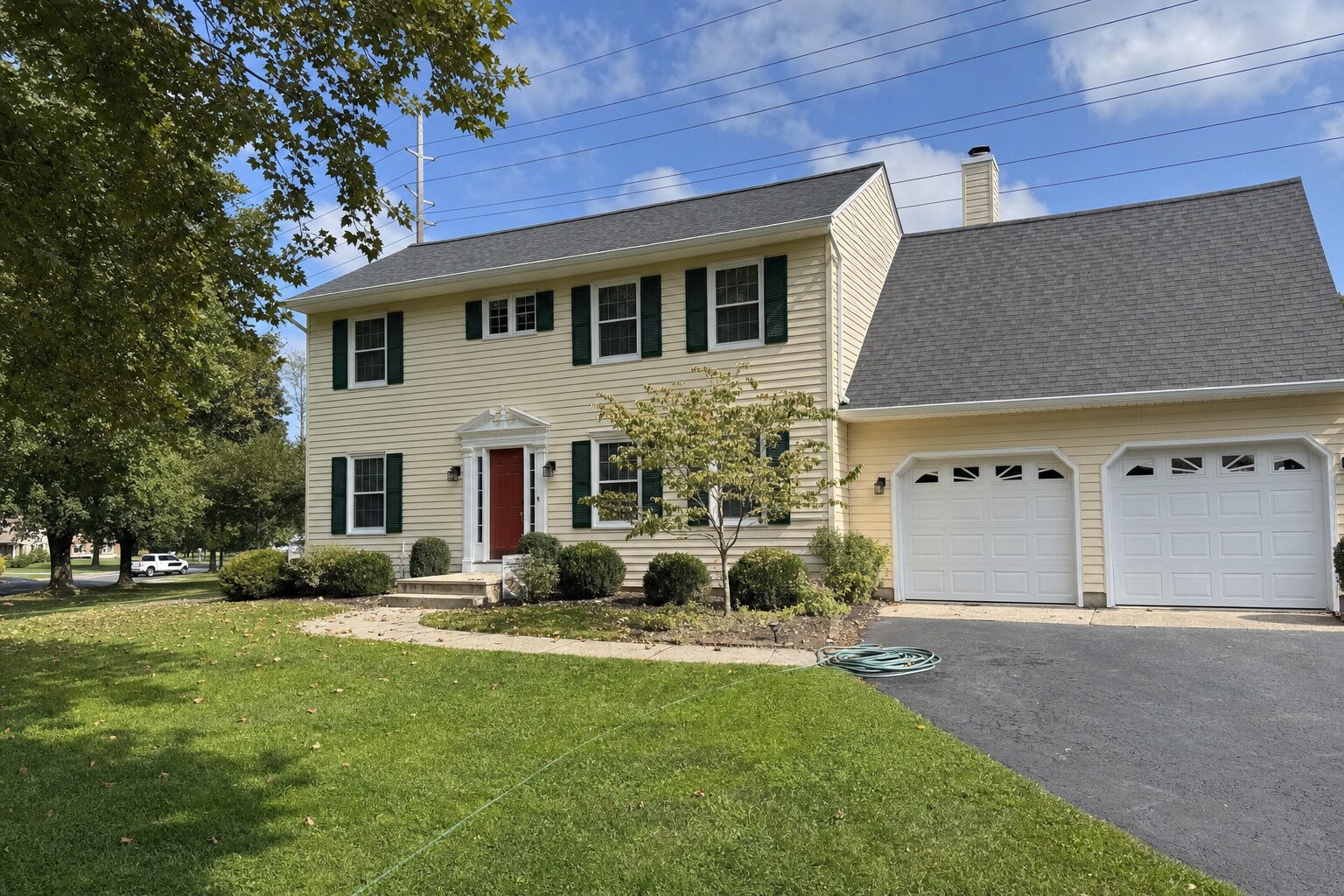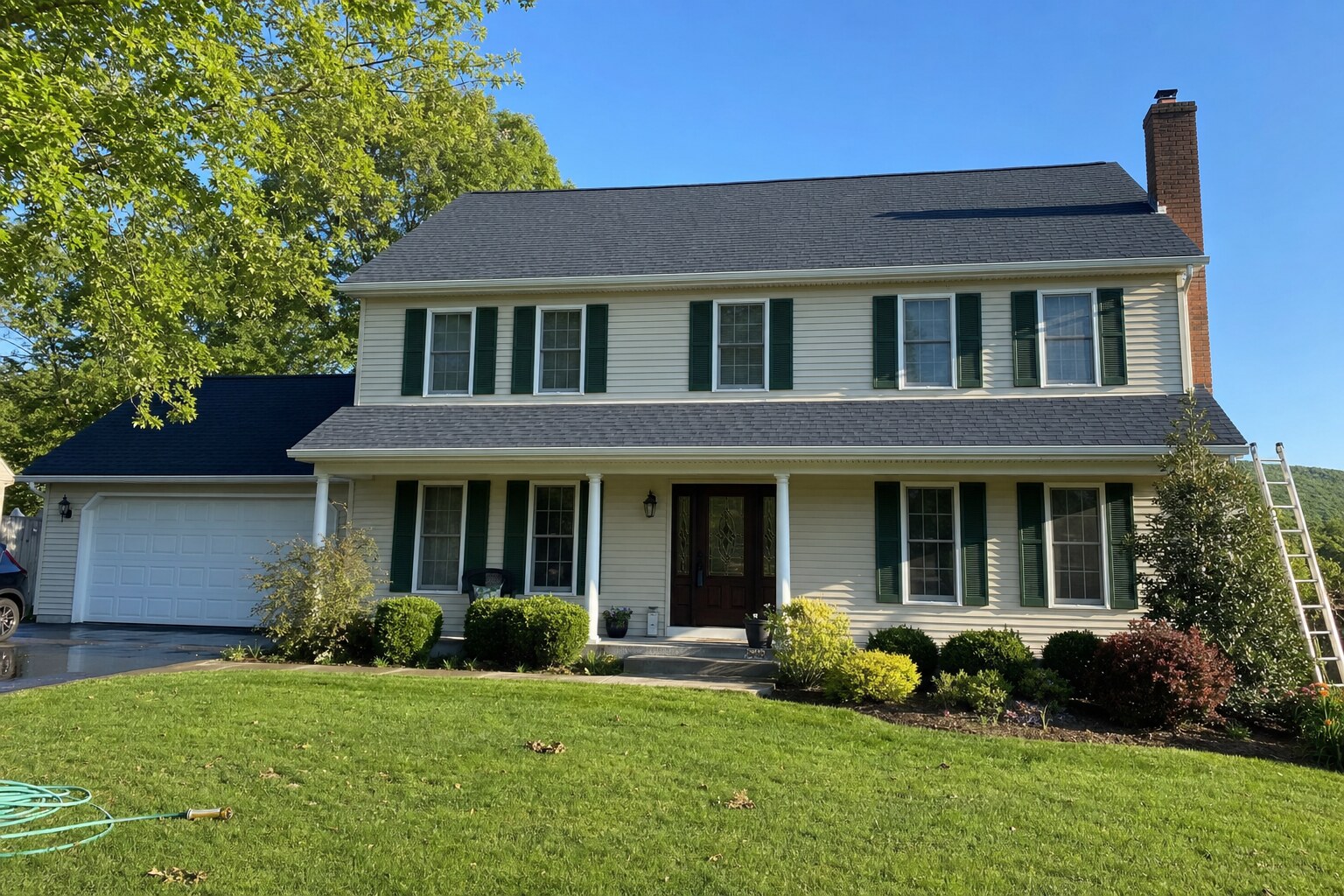
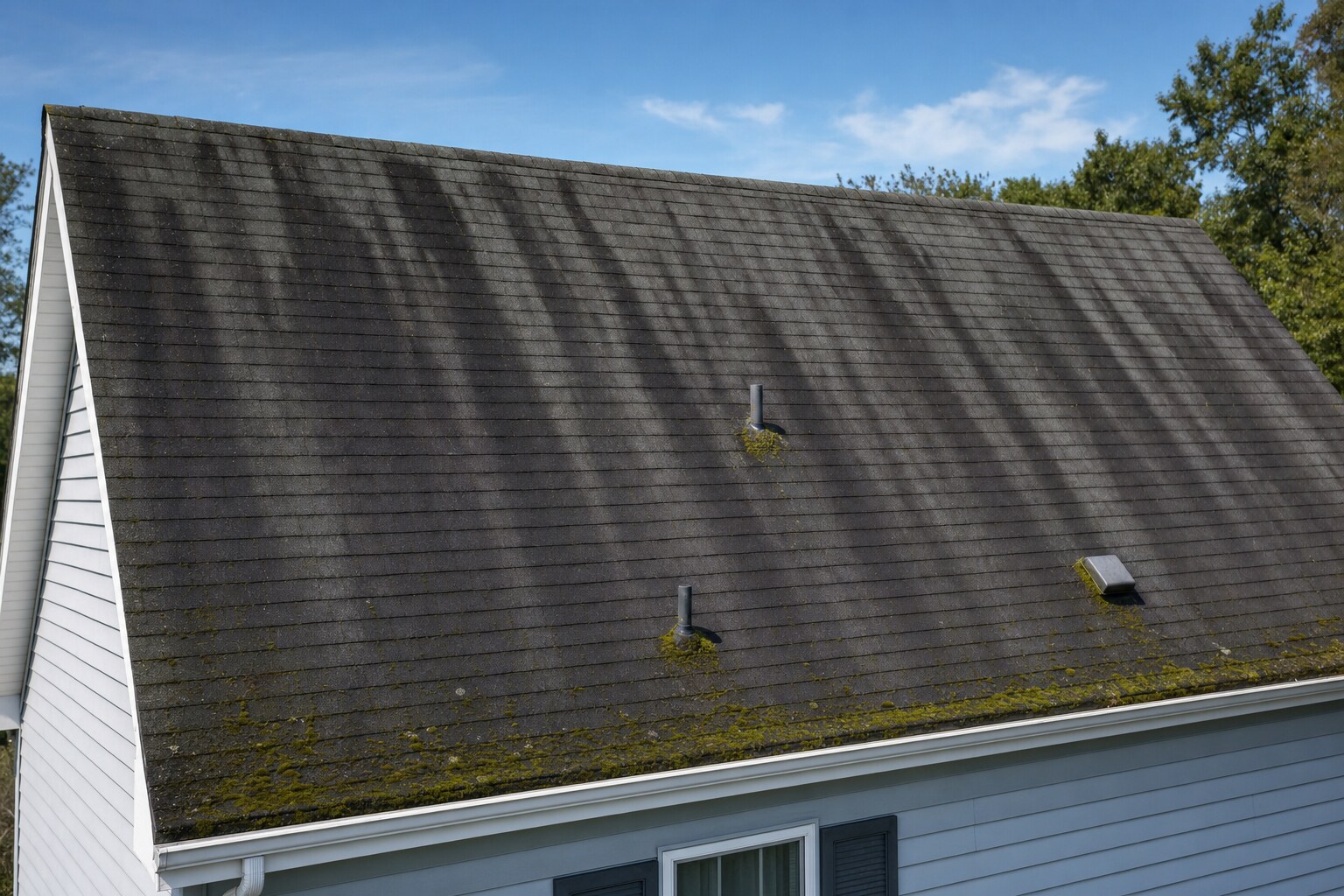
Drive through any neighborhood in Wilkes-Barre, Mountain Top, or Dallas and you will see them: dark streaks running down asphalt shingle roofs, usually on the north-facing slope, like someone dragged a dirty mop from the ridge to the gutter. Most homeowners assume it is soot, dirt, or just "an old roof." It is none of those things.
Those streaks are Gloeocapsa magma — a blue-green algae that is alive, spreading, and slowly eating your shingles.
What Gloeocapsa Magma Actually Is
Gloeocapsa magma is an airborne algae that lands on your roof as spores carried by wind, birds, and squirrels. Once it settles, it feeds on two things your roof supplies in abundance: moisture and the crushed limestone filler that shingle manufacturers blend into asphalt shingles.
The streaks look black because the algae builds a dark, UV-protective sheath around itself — essentially sunscreen. That dark coating is why the streaks show up so starkly against lighter shingles, and it is also why they are more than a cosmetic problem.
Why It Shows Up So Often in Northeast Pennsylvania
Algae needs moisture and shade to establish itself, and our region delivers both. Humid summers, regular rainfall, morning fog in the valleys, and heavily wooded lots around Harveys Lake, the Back Mountain, and Mountain Top give Gloeocapsa magma everything it needs. North-facing slopes stay damp longest after rain and dew, which is why streaking almost always starts there.
Once one roof on the street has it, spores spread easily to neighboring homes — which is why you will often see the same streaking pattern repeat down an entire block.
What the Streaks Do to Your Roof
Left alone, roof algae causes three real problems:
- It shortens shingle life. The algae feeds on the limestone in the shingle itself, and the colony holds moisture against the roof surface. Over years, that accelerates granule loss — the protective layer your shingles depend on.
- It raises cooling costs. The dark colonies absorb heat instead of reflecting it, raising attic temperatures in the summer.
- It invites worse growth. An established algae colony is the foothold moss and lichen need. Lichen in particular roots into the shingle surface and tears granules loose when it is disturbed — significantly harder and riskier to remove than algae.
There is also the appraisal problem. Heavy streaking reads as "this roof is failing" to buyers and home inspectors, even when the shingles underneath have years of life left. Many homeowners have been quoted a full roof replacement for what was actually a cleaning problem.
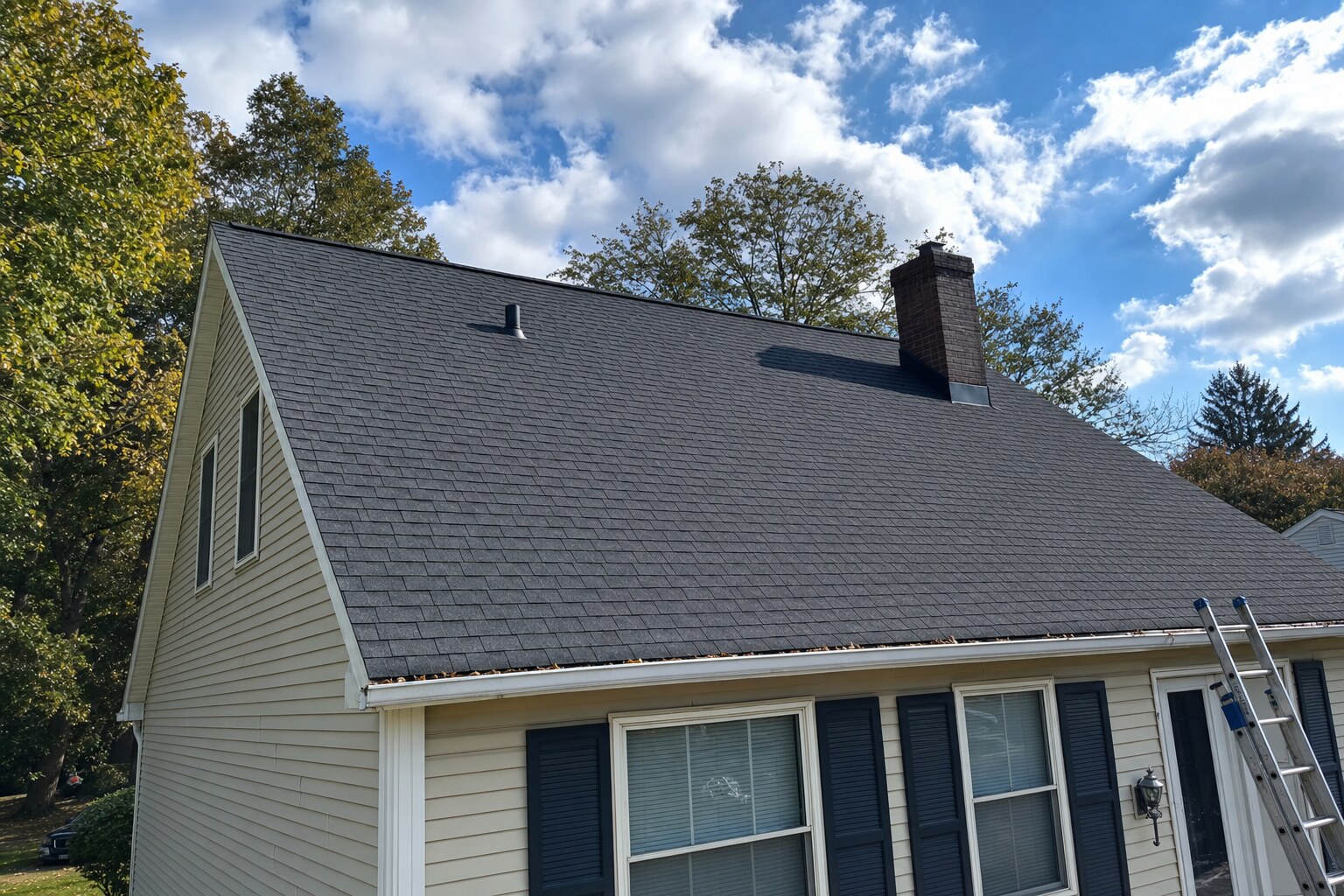
How to Remove Black Streaks Safely
Here is the part that surprises most people: you should never pressure wash an asphalt shingle roof. High-pressure water strips the granules that protect the shingle, voids most manufacturer warranties, and can drive water under the shingles. A pressure-washed roof often looks clean for a season and then fails years early.
The method shingle manufacturers and the Asphalt Roofing Manufacturers Association (ARMA) actually endorse is soft washing: a low-pressure application of a sodium hypochlorite–based cleaning solution that kills the algae colony at the root, followed by a gentle rinse — no more force than heavy rain. Because the organism is killed rather than blasted off, the streaks do not return the following spring the way they do after aggressive washing or scraping.
We wrote a full comparison of the two methods in Soft Washing vs. Pressure Washing if you want the details surface by surface.
What About the Zinc Strip Trick?
You may have read about nailing zinc or copper strips along the ridge so rainwater carries algae-killing ions down the roof. There is real chemistry behind it, but in practice the protection only extends a few feet below the strip, it does nothing for the streaks already on the roof, and installing strips means putting new fasteners through a finished roof. It can be a reasonable supplement on a freshly cleaned roof — it is not a fix for an infested one.
Seeing streaks on your roof? Send us a photo through our contact form and we will tell you honestly whether it is algae, moss, lichen, or plain weathering — and whether cleaning will fix it. Free, no obligation, usually same-day.
When to Deal With It
The earlier you treat algae, the cheaper and gentler the fix. Light streaking on an otherwise sound roof is a routine soft wash. A roof that has progressed to heavy moss and lichen needs a longer, more careful treatment — and if growth has been grinding away granules for a decade, cleaning cannot give back what is already lost.
If your roof is showing its first streaks now, put cleaning on this season's list. Our guide on how often NEPA roofs need cleaning covers the schedule question in detail, and our roof cleaning service page explains exactly how we do the work — backed by our No Damage Promise.